
89.00$ Original price was: 89.00$.79.00$Current price is: 79.00$.
Testoplex E300 10ml Best USA
Testoplex E300 by XT Labs is an injectable anabolic steroid that delivers 300 mg of testosterone enanthate per milliliter, designed for long-acting release and stable hormone levels. This formulation is widely used in testosterone replacement therapy (TRT) to restore normal androgen balance in men with low testosterone, improving energy, muscle mass, bone density, and overall vitality. Thanks to its enanthate ester, Testoplex E300 offers a predictable pharmacokinetic profile, requiring less frequent injections while maintaining consistent physiological effects. It is also valued by athletes and bodybuilders for its anabolic properties, though medical supervision is essential to ensure safe and effective use.
Description
Testoplex E300 XT Labs: Benefits, Enanthate vs Cypionate Differences, and TRT Use
Testoplex E300 has become a widely discussed option among patients undergoing testosterone replacement therapy (TRT) and athletes seeking performance enhancement. As a formulation of testosterone enanthate produced by XT Labs, it offers distinct pharmacological properties that influence how testosterone is released and maintained in the body. Understanding its benefits, comparing it with its close counterpart Testoplex C300 (testosterone cypionate), and exploring its medical role in TRT provides valuable insight for anyone considering or researching testosterone therapy.
What Is Testoplex E300?
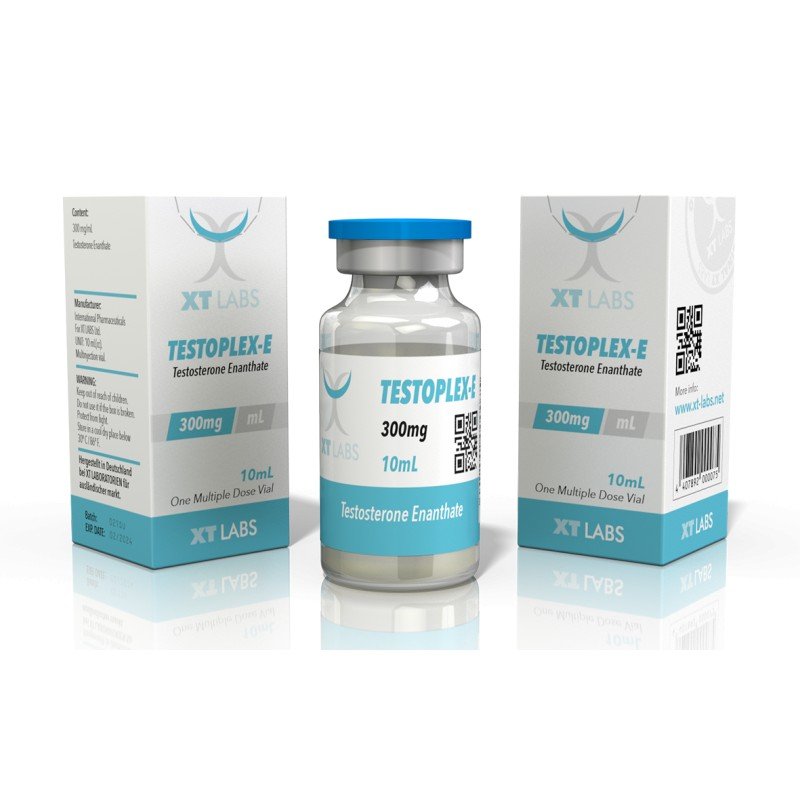
Testoplex E300 is the brand name for an injectable anabolic steroid product containing testosterone enanthate at a concentration of 300 mg/mLsteelgear.net. In simple terms, it is a form of testosterone (the primary male sex hormone) attached to the enanthate ester, which makes it a long-acting testosterone injection. Testoplex E300 is produced by XT Labs and is typically supplied in a 10 mL vial (each milliliter containing 300 mg of testosterone enanthate)steelgear.net. As an androgenic-anabolic steroid (AAS), its primary purpose is to increase testosterone levels in the body, which can support muscle growth, strength, and masculine characteristics.
In medical settings, testosterone enanthate injections like Testoplex E300 are used in testosterone replacement therapy (TRT) for men with low testosterone (hypogonadism). They help restore normal hormonal levels and alleviate symptoms of testosterone deficiencypmc.ncbi.nlm.nih.gov. Outside of TRT, products like Testoplex E300 have also been used (often illicitly) by athletes and bodybuilders to enhance muscle mass and performance, given testosterone’s anabolic effectssteroidshopsusa.com. It is important to note that Testoplex E300 is essentially the same active substance as pharmaceutical testosterone enanthate (just at a specific concentration), and its effects and risks are those of testosterone itself.
Benefits of Testoplex E300 XT Labs 10ml (Testosterone Enanthate)
Testoplex E300 (Testosterone Enanthate) offers clinically validated benefits for men undergoing testosterone replacement therapy (TRT) and athletes seeking muscle recovery and performance enhancement. Its therapeutic effects extend across hormonal balance, muscle growth, bone density, energy, and metabolic health.
Restores Hormonal Balance and TRT Benefits
When prescribed medically for hypogonadism (low testosterone levels), Testoplex E300 helps restore testosterone to optimal physiological ranges.
-
Sexual health: Enhances libido, improves erectile function, and supports sexual confidence.
-
Mood & cognition: Reduces depression and brain fog while improving focus and motivation.
-
Energy & vitality: Increases red blood cell production, improving oxygen delivery and overall stamina.
-
Muscle & bone health: Promotes lean muscle growth and bone mineral density.
-
Quality of life: Alleviates symptoms like fatigue, low drive, and irritability—typical in men with low T.
These results are supported by clinical studies available on PMC showing that TRT with testosterone enanthate improves sexual function, mood, muscle mass, and bone density in men with low testosterone.
Muscle Mass and Strength Development
Testoplex E300 is recognized for its potent anabolic properties, making it a cornerstone for both medical therapy and strength performance enhancement.
-
Lean mass increase: Stimulates protein synthesis and positive nitrogen balance, supporting muscle hypertrophy.
-
Strength improvement: Increases physical performance and power output, especially in compound lifts.
-
Scientific evidence: Research on high-dose testosterone enanthate (600 mg/week for 10 weeks) demonstrated significant improvements in fat-free mass, bench press, and squat strength—even in participants who did not train actively (PubMed).
Medically supervised TRT produces controlled muscle gains, while non-medical or supraphysiologic use can amplify these effects—but also heighten health risks.
Enhanced Recovery and Athletic Performance
Testoplex E300 accelerates recovery and boosts training endurance, key for consistent progression in athletic or strength-focused regimens.
-
Protein synthesis: Enhances the rebuilding of muscle fibers post-exercise.
-
Nitrogen retention: Prevents muscle breakdown during caloric deficit or overtraining.
-
Oxygenation: Increases red blood cell production, leading to improved muscular endurance.
-
Cortisol reduction: Lowers catabolic hormone activity, protecting muscle tissue from stress-related degradation.
Studies confirm that testosterone’s ability to boost oxygen delivery and recovery speed contributes to measurable improvements in athletic output and resilience.
Bone Density and Body Composition
Beyond performance, Testoplex E300 supports the structural foundation of male health.
-
Bone mineralization: TRT restores bone density in men with osteoporosis or age-related decline.
-
Body composition: Increases lean muscle while reducing visceral fat, improving overall metabolic function.
-
Insulin sensitivity: Testosterone normalization helps regulate glucose metabolism, reducing the risk of type 2 diabetes.
TRT trials published on PMC demonstrate that testosterone therapy improves fat-to-muscle ratio, enhancing both metabolic and cardiovascular health profiles.
Medical Guidance and Responsible Use
While Testoplex E300 offers multiple benefits, proper medical supervision is essential to maintain safety and efficacy.
-
TRT dosing: Physicians titrate doses to maintain testosterone within the physiological range.
-
Monitoring: Regular blood tests (hematocrit, lipids, PSA, liver enzymes) ensure long-term safety.
-
Avoid misuse: High-dose bodybuilding cycles can lead to cardiovascular strain, hormonal suppression, and other adverse effects.
Responsible TRT under professional supervision ensures maximum benefits with minimal risks, preserving both hormonal health and long-term well-being.
Testoplex E300 Xt Labs vs. Testoplex C300: Testosterone Enanthate vs. Cypionate
Testoplex E300 and Testoplex C300 are two similar products from XT Labs, with one key difference: the ester attached to the testosterone molecule. Testoplex E300, as discussed, contains testosterone enanthate, whereas Testoplex C300 contains testosterone cypionate (also typically dosed at 300 mg/mL). Both enanthate and cypionate are long-acting testosterone esters used for similar purposes, but there are some subtle differences. Below, we compare them in detail:
Chemical Structure and Ester Difference
The only chemical difference between testosterone enanthate and testosterone cypionate is the ester chain. Testosterone itself is a steroid molecule; when we add an ester, we modify how soluble it is in oil and how slowly it’s released into the bloodstream.
-
Testosterone Enanthate is testosterone attached to the enanthate ester, which is also known as heptanoate (a chain of 7 carbons in its structure).
-
Testosterone Cypionate is attached to the cypionate ester, known chemically as cyclopentylpropionate (which effectively has an 8-carbon chain, including a cyclopentyl ring.
This means cypionate’s ester is slightly larger/longer than enanthate’s. Practically, this slight difference in molecular structure (8-carbon ester vs 7-carbon ester) affects how the drug is absorbed and metabolized: a longer ester will be released a tad more slowly from the injection site. In other words, testosterone cypionate has a slightly slower release once injected, owing to its marginally more massive ester group.
However, it’s important to emphasize that the active hormone released into the bloodstream is the same – testosterone. Once the body cleaves off the ester (which happens over days), what remains is bioidentical testosterone that will bind to androgen receptors and exert its effects. The esters only influence the timing of release and half-life, not the hormone’s action. Both enanthate and cypionate are considered “long-acting” esters.
Half-Life and Duration of Action
Because of the ester difference, testosterone cypionate is often cited as having a slightly longer half-life than enanthate. Testosterone enanthate has an elimination half-life around ~7–9 days (about one week) when injected intramuscularlyverywellhealth.com. Testosterone cypionate’s half-life is roughly ~8 days – very closely overlapping with enanthate’s rangeverywellhealth.com. In fact, pharmacologists consider their pharmacokinetic profiles “extremely comparable”, to the point that enanthate and cypionate are functionally interchangeable in medical useen.wikipedia.org.
To put it simply, both enanthate and cypionate will remain active in the body for a similar length of time after injection. Typically, each is administered on a weekly to bi-weekly schedule in TRT to maintain steady levels. Any difference in how long they “last” is minimal. One review notes that testosterone enanthate might stay in the system slightly longer than cypionate, but the difference is so small that it usually does not change how the drugs are used or dosed in hypogonadal males. Both esters will provide elevated testosterone for about 2–3 weeks, with peak levels in the first week and a slow decline thereafter.
For a more visual comparison, the table in the next section outlines the half-lives of various common testosterone esters, including enanthate and cypionate, highlighting how close they are:
Half-Life of Different Testosterone Esters (Comparison Table)
To understand the release speed of various testosterone formulations, here is a comparison of half-lives for common testosterone esters used in therapy or performance settings:
| Testosterone Form (Ester) | Approximate Half-Life | Category |
|---|---|---|
| No Ester (Testosterone Suspension) | ~1 day (≈ 24 hours) | Ultra short-acting – very rapid release, requires frequent (often daily) injections. |
| Testosterone Propionate | ~4.5 | Short-acting – quick release, injections usually every other day or ~2–3× per week. |
| Testosterone Enanthate | ~7–9 | Long-acting – slower release, typically injected weekly (or bi-weekly at higher doses). |
| Testosterone Cypionate | ~8 | Long-acting – very similar to enanthate; usually a once-weekly injection schedule. |
| Testosterone Undecanoate | ~34 | Ultra long-acting – very slow release; in injectable form (e.g. Nebido®) it’s dosed once every 8–12 weeks in TRT. |
Note: Half-life values can vary slightly between studies and individuals. The numbers above are approximate averages for intramuscular injection in adults. “Half-life” is the time for the drug’s concentration to drop by 50% in the blood, so it generally takes around 4–5 half-life periods for a drug to be mostly eliminated. Enanthate and cypionate are so close in half-life that they’re used almost interchangeably in practice.
As the table shows, testosterone enanthate vs cypionate differ only by a day or two in half-life. In contrast, shorter esters like propionate release much faster (requiring more frequent dosing), while very long esters like undecanoate release very slowly (allowing infrequent dosing, but taking longer to reach stable levels). Enanthate and cypionate both hit a sweet spot of about a week-long half-life, making them convenient for weekly injection routines.
Similarities and Practical Interchangeability
Beyond the tiny half-life distinction, Testoplex E300 (enan) and Testoplex C300 (cyp) have far more similarities than differences:
Clinical Effects
Both provide the same physiological effects of testosterone once active – increased muscle protein synthesis, improved libido, mood elevation, red blood cell stimulation, etc.
A person on 200 mg of enanthate weekly versus 200 mg of cypionate weekly would experience equivalent hormonal levels and results over the long term. Doctors often consider the two “functionally interchangeable” for TRT.
Dosage and Administration
Both enanthate and cypionate are typically administered via intramuscular injection, though subcutaneous injections are also used in modern TRT protocols for both esters.
The dosing range for treating low testosterone is the same: for example, 50–400 mg every 2 to 4 weeks is an FDA-approved guideline for both enanthate and cypionate in male hypogonadism.
In practice, many physicians prefer 100 mg weekly (or 200 mg every two weeks) to maintain steadier levels.
Both esters come in similar concentrations (often 200 mg/mL in pharma products, though XT Labs has them at 300 mg/mL in the Testoplex line).
Approval and Uses
Testosterone cypionate (brand name example: Depo-Testosterone®) has historically been most popular in the United States, whereas testosterone enanthate (Delatestryl®, Xyosted®) is used worldwide and was more common in Europe.
However, both are approved for the same indications: primary and hypogonadotropic hypogonadism in males.
One minor difference: testosterone enanthate has a slightly wider range of approved uses – for instance, it’s indicated (at high doses) as a secondary therapy for metastatic breast cancer in postmenopausal women and for inducing puberty in delayed adolescent boys, whereas cypionate is typically just for male hypogonadism.
This is a regulatory difference more than a pharmacologic one.
Side Effect Profiles
Since they yield the same hormone, enanthate and cypionate share identical side effect profiles.
Both can cause estrogenic side effects (since some testosterone converts to estrogen) like water retention, gynecomastia (male breast tissue growth), or blood pressure increases.
Both can cause androgenic side effects such as acne, oily skin, increased body hair, hair loss on the scalp (if genetically prone), and potential prostate enlargementsteroidshopsusa.comsteroidshopsusa.com.
They also both suppress natural testosterone production, which is why PCT (post-cycle therapy) or ongoing TRT is required after using them in a cyclesteroidshopsusa.com.
There is no meaningful difference in the incidence or type of side effects between the two esters – if your body aromatizes testosterone readily, you’ll experience that with either ester.
Are There Any Notable Differences?
Given how similar these two forms are, users often ask if anything sets enanthate and cypionate apart in practice. Here are a few minor points sometimes discussed:
Injection Comfort and Carrier Oil
Historically, pharmaceutical testosterone cypionate (Depo-Testosterone) was formulated in cottonseed oil, whereas many testosterone enanthate preparations use sesame oil as the carrierverywellhealth.comverywellhealth.com.
Cottonseed oil is a bit thinner in viscosity, making cypionate slightly easier to draw into a syringe and inject, while sesame oil is thicker and may cause a bit of post-injection lump or soreness for some usersverywellhealth.com.
This is not a property of the ester itself but of the specific product’s formulation.
(We do not have confirmation of which oil XT Labs uses in Testoplex E300 vs C300, but this historical note is worth mentioning for general knowledge.)
Some users anecdotally report one feels “smoother” than the other, but such differences usually come down to injection technique and formulation rather than the testosterone ester per se.
Release Curve and Peak Levels
Both enanthate and cypionate have their testosterone peak occur within a few days after injection and then decline.
Some pharmacokinetic analyses suggest testosterone enanthate might release a touch faster initially, producing a slightly higher early peak and then falling off, whereas cypionate might release a bit more evenly.
In fact, one source notes that enanthate, with a 4.5-day elimination half-life, often causes peak levels that are initially higher and then large fluctuations, whereas cypionate’s curve is just a tad flatteren.wikipedia.org.
In practical terms, these fluctuations are managed by injection frequency.
Many TRT doctors now split weekly doses into two smaller injections per week (regardless of ester) to keep levels very stable and minimize any highs and lows.
So, any slight kinetic differences can be evened out with dosing schedule adjustments.
Anecdotal User Perceptions
If you read bodybuilding forums, you may find varied opinions on enanthate vs cypionate – some claim that one causes more water retention or that one gives a different “feel”.
For example, a few individuals feel they hold a bit more water on enanthate (possibly due to the quick initial peak) and prefer cypionate for a drier gain, whereas others notice no difference at all.
It’s critical to note these are subjective reports without scientific confirmation.
Controlled studies do not show a clear advantage of one over the other in terms of muscle gain or side effects.
The consensus in the medical community is that there is no robust evidence distinguishing the outcomes of enanthate vs cypionate – they are interchangeable testosterone depotsen.wikipedia.org.
Thus, choosing one over the other often boils down to availability, prescription, or personal preference, rather than efficacy.
Testosterone Enanthate in TRT (Therapeutic Use)
Testosterone Enanthate is one of the most widely prescribed and studied forms of testosterone used in testosterone replacement therapy (TRT). For decades, it has been a cornerstone treatment for men with testosterone deficiency, including conditions such as primary hypogonadism (when the testes produce insufficient testosterone) and hypogonadotropic hypogonadism (when the brain fails to properly signal the testes).
Below is a breakdown of how Testosterone Enanthate—including formulations like Testoplex E300—is applied in modern medical practice.
Typical Dosing in TRT
A standard TRT regimen with testosterone enanthate typically involves 75–100 mg injected weekly or 150–200 mg every two weeks.
The main goal is to restore testosterone levels to the mid-normal range while minimizing hormonal fluctuations.
Many physicians now favor smaller, more frequent doses—for example, 50 mg twice per week—to ensure stable hormone levels and smoother symptom relief.
Although older prescribing guidelines allowed up to 400 mg every four weeks, contemporary protocols emphasize consistency over quantity.
Some modern preparations also allow subcutaneous weekly injections using auto-injectors that deliver 50–100 mg, offering convenience and tolerability.
Ultimately, each patient’s dose is individualized based on symptoms, blood tests, and hormone stability.
Administration Method
Traditionally, testosterone enanthate is administered via intramuscular (IM) injection into large muscles such as the gluteus or thigh.
However, it can also be administered subcutaneously (SubQ) into fatty tissue around the abdomen or thigh.
Studies show that SubQ injections can provide stable testosterone levels and improved comfort for certain patients.
-
Intramuscular injections: typically use a 1–1.5 inch needle for deep muscle delivery.
-
Subcutaneous injections: use an insulin-type short needle.
Both routes are effective; the decision depends on patient preference, injection comfort, and clinician guidance.
Monitoring and Adjustment
During TRT, ongoing medical monitoring is essential. Physicians typically assess:
-
Serum testosterone trough levels (just before the next injection).
-
Patient-reported symptoms such as energy, mood, libido, and strength.
-
Side effects or hematologic changes (hematocrit, hemoglobin, etc.).
If testosterone levels remain low at the current dose, the physician may adjust upwards, e.g., from 100 mg/week to 120 mg/week.
If mood or energy swings occur due to large hormonal peaks and valleys, the schedule may shift from biweekly to weekly injections.
Maintaining consistent testosterone levels generally produces better symptom control and fewer side effects.
Therapeutic Benefits
When properly administered, TRT with testosterone enanthate can profoundly improve overall health and vitality in men suffering from low testosterone.
Commonly observed benefits include:
-
Enhanced sexual function, libido, and erectile quality.
-
Noticeable improvements in energy, stamina, and motivation.
-
Better mood stability and cognitive sharpness.
-
Increased muscle mass, reduced body fat, and improved strength.
-
Improved bone mineral density, lowering fracture risk.
-
Healthier metabolic markers, including improved cholesterol and blood sugar regulation.
-
Stimulated red blood cell production, addressing mild anemia.
In many cases, TRT with testosterone enanthate can be life-changing, helping men regain physical vitality, confidence, and emotional stability.
Safety and Precautions
When used responsibly and under supervision, testosterone enanthate is safe and well tolerated.
However, periodic medical evaluations are vital to ensure patient safety. Physicians typically monitor:
-
Hematocrit and hemoglobin (to prevent thickened blood).
-
Liver enzymes and lipid profile.
-
PSA (prostate-specific antigen) for prostate health.
-
Blood pressure and general cardiovascular markers.
Because TRT can increase red blood cell count, careful monitoring prevents excessive levels that might raise cardiovascular risk.
Prostate screening is also standard, since testosterone can stimulate existing, but not new, prostate abnormalities.
Men concerned about fertility should be aware that TRT temporarily suppresses sperm production.
In such cases, specialists may use adjunct medications like hCG to maintain fertility while on therapy.
TRT vs. Performance Doses
It’s crucial to distinguish TRT use from performance-enhancing or bodybuilding use.
-
TRT doses: aim to restore testosterone to natural physiological levels (around 300–1000 ng/dL).
-
Performance doses: often range from 300–600 mg per week or more, reaching supraphysiological levels.
While the latter may lead to faster muscle gain, it also drastically increases the risk of side effects such as hypertension, gynecomastia, and hormonal imbalance.
TRT is about restoring normal function and improving health, not about exceeding natural limits.
Patients under proper medical guidance using Testoplex E300 for TRT should always maintain a therapeutic mindset, focusing on safety, stability, and quality of life.
Testoplex E300 (Testosterone Enanthate) FAQ: Everything You Need to Know About Dosage, Effects, and TRT Use
What is Testoplex E300 and what does it contain?
Testoplex E300 is an injectable anabolic steroid produced by XT Labs that contains testosterone enanthate at a concentration of 300 mg per mL Each 10 mL vial provides a total of 3000 mg of testosterone enanthate the same active ingredient used in medical testosterone therapies This compound is designed to elevate testosterone levels either for testosterone replacement therapy TRT or for performance enhancement in athletic contexts
What is the difference between Testoplex E300 and Testoplex C300?
Both products contain testosterone as their active ingredient but differ in the ester attached to the testosterone molecule Testoplex E300 contains testosterone enanthate a seven carbon ester while Testoplex C300 contains testosterone cypionate an eight carbon ester This structural difference gives testosterone cypionate a slightly longer half life of about eight days compared to enanthate’s seven to nine days In practice both act as long acting testosterone esters that produce nearly identical results and the choice usually depends on availability or personal preference
Which is better for TRT – testosterone enanthate or testosterone cypionate?
Neither ester is better than the other Both are medically equivalent and provide the same benefits when dosed correctly Testosterone cypionate is more commonly prescribed in the United States while testosterone enanthate is used internationally When injected consistently every one to two weeks either form effectively restores testosterone to healthy levels
How often should I inject Testoplex E300 for TRT?
For testosterone replacement therapy weekly injections are generally preferred such as 100 mg every seven days Some older protocols recommend injections every 10 days or two weeks but these schedules often cause hormonal fluctuations Many users choose to split the weekly dose into two smaller injections to maintain stable blood levels Since Testoplex E300 is a long acting formulation with an approximate half life of eight days steady hormone concentrations are typically reached after several weeks of consistent use
How long does it take for testosterone enanthate to kick in?
Initial effects can appear within one to two weeks but most users notice full benefits after four to six weeks of continuous use Testosterone levels begin to rise within 24 to 48 hours after injection and remain elevated for about a week With a half life of seven to nine days the compound can stay active for up to three weeks Users often experience gradual improvements in strength libido mood and energy as the therapy stabilizes
What benefits can I expect from testosterone enanthate replacement therapy?
When prescribed for clinically low testosterone levels TRT with Testoplex E300 can deliver multiple health benefits including enhanced sexual function and libido improved mood and motivation increased muscle mass with reduced body fat higher energy and vitality and greater bone density with reduced fracture risk These effects appear gradually over several weeks or months and are enhanced by proper nutrition training and sleep
What are the side effects of testosterone enanthate Testoplex E300?
At therapeutic doses side effects are usually mild and manageable Possible androgenic effects include acne oily skin body hair growth or scalp hair thinning Estrogenic effects can involve water retention bloating mild gynecomastia or slightly increased blood pressure Endocrine effects may include temporary suppression of natural testosterone production testicular shrinkage or reduced sperm count Higher doses can raise the risk of elevated red blood cell count worsening of sleep apnea or prostate enlargement Injectable testosterone does not cause liver toxicity and regular medical monitoring helps minimize potential risks
Are testosterone enanthate and cypionate really the same and why do both exist?
Yes both are slow release testosterone esters that produce the same effects in the body They were developed independently by different pharmaceutical companies in the 1950s and 1960s to replace testosterone propionate which required very frequent injections Today both esters are widely available and functionally interchangeable with differences that are mostly historical and regional
Can women use Testoplex E300 or testosterone enanthate?
Testosterone enanthate is not recommended for women because it can cause virilization leading to voice deepening facial or body hair growth acne menstrual irregularities and clitoral enlargement some of which may be permanent Only in rare medical cases such as specific breast cancer treatments in postmenopausal women might testosterone be used under strict medical supervision For healthy women it is considered unsafe and inappropriate for any regular or performance use
Is Testoplex E300 legal and how does it compare to pharmaceutical testosterone?
The legality of testosterone products depends on national regulations In most countries testosterone is a controlled substance that requires a prescription Testoplex E300 is manufactured by an underground laboratory rather than a licensed pharmaceutical company which means its possession or sale without a prescription may be illegal Pharmaceutical testosterone products follow strict quality and purity standards while underground versions can vary in concentration and sterility For individuals with a legitimate medical need obtaining testosterone through a licensed healthcare provider is always the safest and most reliable option
Sources:
-
Bassil N. et al. (2009). The benefits and risks of testosterone replacement therapy: a review. Therapeutics and Clinical Risk Management, 5:427–448. (Provides an overview of TRT outcomes and safety)pmc.ncbi.nlm.nih.govpmc.ncbi.nlm.nih.gov.
-
Bhasin S. et al. (1996). The effects of supraphysiologic doses of testosterone on muscle size and strength in normal men. NEJM, 335(1):1-7. (Demonstrates muscle and strength gains with high-dose testosterone enanthate)pubmed.ncbi.nlm.nih.govpubmed.ncbi.nlm.nih.gov.
-
Verywell Health – Gulzar, A. (PharmD). Comparing Testosterone Cypionate vs. Enanthate. (2025) – Medical review by F. Aremu, PharmD. (Explains differences in half-life, uses, and formulation between enanthate and cypionate)verywellhealth.comverywellhealth.comverywellhealth.com.
-
Empower Pharmacy – Half-Life of Testosterone Ester Injections (Compounding pharmacy educational article). (Lists half-lives of common testosterone esters)empowerpharmacy.com.
-
XT Labs / Steelgear product data – Testoplex E300 and Testoplex C300 specifications. (Confirmation of product contents: testosterone enanthate 300 mg/mL and testosterone cypionate 300 mg/mL, respectively)steelgear.netsteelgear.net.
-
DrugBank Online – Testosterone Enanthate & Testosterone Cypionate profiles. (Pharmacokinetics details: enanthate half-life 7–9 daysgo.drugbank.com; cypionate half-life ~8 daysgo.drugbank.com.)
-
PubMed (Acta Endocrinol. 1990) – Weinbauer et al. Pharmacokinetics of testosterone enanthate in primates. (Reports an elimination half-life ~4-5 days for enanthate in a research setting)pubmed.ncbi.nlm.nih.govpubmed.ncbi.nlm.nih.gov.
-
MedlinePlus & Drugs.com – Testosterone Injection (Intramuscular) – dosage guidelines. (Typical dosing range for enanthate/cypionate in hypogonadism: 50–400 mg every 2–4 weeks)drugs.compmc.ncbi.nlm.nih.gov.
Reviews
There are no reviews yet.