
99.00$ Original price was: 99.00$.79.00$Current price is: 79.00$.
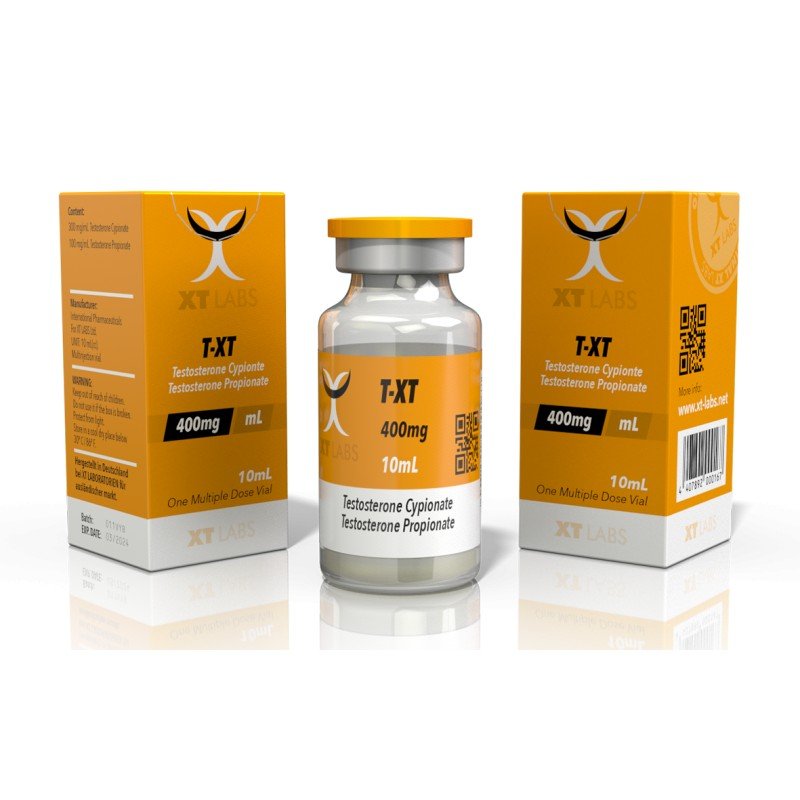
TXT (Test 400) XT Labs 10ml Top USA
TXT Test 400 by XT Labs (10ml vial) is a high-potency anabolic formulation that combines 300 mg of Testosterone Cypionate and 100 mg of Testosterone Propionate per milliliter, delivering a total of 400 mg of testosterone. This dual-ester blend provides both a rapid onset of action and long-lasting hormone stability, ensuring a fast elevation of testosterone levels followed by sustained release for up to 10 days. Designed for advanced users and testosterone replacement protocols, TXT 400 promotes enhanced muscle growth, strength, and recovery, while maintaining more stable androgen levels than single-ester products. Its concentrated formula allows for powerful anabolic effects with fewer injections, though it requires careful administration and monitoring due to its high dosage and potential side effects associated with supraphysiologic testosterone levels.
Description
TXT (Test 400) by XT Labs: A Pharmacological Analysis of Testosterone Cypionate and Propionate Blend
TXT 400 by XT Labs is an injectable anabolic steroid formulation that combines two esterified testosterone compounds: Testosterone Cypionate (300 mg/mL) and Testosterone Propionate (100 mg/mL), for a total of 400 mg of testosterone per milliliter. This blend is designed to leverage the distinct pharmacokinetic profiles of a long-acting ester (cypionate) and a short-acting ester (propionate) in one solution. In medical contexts, testosterone ester injections are used for androgen replacement therapy in hypogonadal males, whereas in bodybuilding circles such combinations are valued for their rapid onset of anabolic effects coupled with sustained hormone levels. This article provides a detailed pharmacological analysis of the two components of TXT 400, examining how they work individually and together, the advantages of their combination (including serum testosterone peak levels and release kinetics), and a review of associated risks and side effects. The goal is to offer a comprehensive, evidence-based perspective useful for both healthcare professionals and experienced bodybuilders, emphasizing scientific accuracy and safety . All information is supported by credible sources, including peer-reviewed studies and official medical references, to ensure accuracy and reliability.
TXT (Test 400) by XT Labs Testosterone Cypionate vs. Propionate: Pharmacokinetic Profiles
Testosterone Cypionate and Testosterone Propionate are two esterified forms of the same active hormone — testosterone. Their main difference lies in the ester chain length, which directly influences absorption rate, duration of action, and injection frequency. Understanding these pharmacokinetic differences is essential for both clinicians and bodybuilders seeking optimal testosterone replacement or performance enhancement.
Testosterone Propionate
Testosterone Propionate is a short-chain ester known for its rapid release and fast onset of action. After intramuscular (IM) injection, it reaches peak serum levels within 24–36 hours (Medsafe, PubMed). However, its half-life averages only 1–2 days (Empower Pharmacy), requiring frequent administration — typically every other day or every 2–3 days — to maintain stable androgen levels (Empower Pharmacy).
A pharmacokinetic study demonstrated that a single 25 mg IM injection maintained testosterone levels above baseline for approximately 48 hours (PubMed), confirming its short duration of effect. Because of this, propionate is often favored in cycles or early phases of therapy where rapid hormonal elevation is desired.
Testosterone Cypionate
In contrast, Testosterone Cypionate is a long-chain ester that releases more slowly from the injection site. It has an average half-life of around 8 days (Empower Pharmacy, DailyMed) and reaches peak concentrations between 48–72 hours post-injection (Wittmer Rejuvenation Clinic, VitalityHRT). The hormone remains elevated for a week or more, allowing weekly or biweekly dosing schedules (Empower Pharmacy).
Pharmacologically, Cypionate and Enanthate behave almost identically (Wikipedia). A 100 mg weekly dose of testosterone enanthate, for example, produces significant peaks well above the physiological range within days, followed by a gradual decline over 1–2 weeks (Wikipedia). This longer half-life translates into fewer injections but also greater hormonal fluctuations(1), as serum levels rise sharply and taper slowly before the next dose.
Summary of Key Differences
| Parameter | Testosterone Propionate | Testosterone Cypionate |
|---|---|---|
| Ester Length | Short (fast-acting) | Long (slow-acting) |
| Time to Peak | 24–36 hours | 48–72 hours |
| Half-Life | 1–2 days | ~8 days |
| Injection Frequency | Every 2–3 days | Every 7–14 days |
| Release Pattern | Rapid peak, short duration | Gradual onset, prolonged release |
In summary, Testosterone Propionate peaks earlier and clears faster, while Testosterone Cypionate offers a slower, sustained release. When combined — as in TXT 400 by XT Labs — these pharmacokinetic differences create a synergistic release curve, ensuring both a fast initial rise and a long-lasting anabolic effect.
Mechanism of Action of Exogenous Testosterone
Exogenous testosterone, whether from Testosterone Propionate or Testosterone Cypionate, functions identically once it enters the bloodstream. Both esters deliver the same active hormone — testosterone — which supplements the body’s natural androgen levels. This process triggers a cascade of anabolic and androgenic effects that impact muscle growth, libido, energy, and overall male physiology.
Hormonal Conversion and Receptor Binding
After intramuscular injection, the esterified testosterone is gradually cleaved by enzymes, releasing free testosterone into circulation. From that point, the hormone follows multiple key biochemical pathways:
-
5α-reductase conversion to DHT:
In androgen-sensitive tissues such as the skin and prostate, a portion of testosterone is converted into dihydrotestosterone (DHT) by the 5α-reductase enzyme. DHT binds to the androgen receptor with higher affinity than testosterone, amplifying androgenic effects such as hair growth, voice deepening, and prostate stimulation. -
Aromatization to Estradiol (Estrogen):
Another portion of testosterone undergoes aromatization, converting into estradiol (E2) through the aromatase enzyme. While estradiol contributes to bone density, cognitive health, and libido, excessive conversion can cause estrogenic side effects like gynecomastia or water retention if hormonal balance is disrupted.
Cellular Mechanism and Anabolic Effects
Once testosterone or DHT binds to androgen receptors, the hormone-receptor complex enters the cell nucleus and regulates gene expression. This process activates key anabolic pathways responsible for:
-
Increased protein synthesis and nitrogen retention, promoting muscle hypertrophy and faster recovery.
-
Development and maintenance of male secondary sexual characteristics, including deeper voice, facial hair, and improved muscle definition.
-
Enhanced red blood cell production, improving oxygen delivery and endurance.
Clinically, exogenous testosterone restores normal androgen function in men with hypogonadism, reversing symptoms such as fatigue, low libido, and muscle wasting. In bodybuilding, supraphysiological doses of testosterone significantly increase muscle mass, strength, and recovery, though they also elevate the risk of hormonal imbalance and adverse effects.
Endocrine Feedback Suppression
Both Testosterone Propionate and Testosterone Cypionate in TXT 400 by XT Labs yield the same active testosterone molecule; their only difference is the rate and duration of release. However, continuous exposure to exogenous testosterone suppresses the hypothalamic–pituitary–gonadal (HPG) axis, reducing the secretion of LH and FSH. This feedback inhibition leads to testicular atrophy, reduced sperm production, and potential infertility during prolonged use.
This suppression highlights the importance of medical monitoring and proper post-cycle recovery protocols when testosterone therapy or anabolic regimens are applied.
TXT (Test 400) Combined Use of Cypionate and Propionate: Interaction and Advantages
When combined in a single injection, as in TXT 400 by XT Labs, Testosterone Propionate and Testosterone Cypionate work synergistically to produce a biphasic release of testosterone. This unique pharmacological design delivers both an immediate rise in hormone levels and a sustained release, ensuring a faster onset of effects and longer stability between doses.
Rapid Onset
The propionate component (100 mg/mL) acts as a fast-acting ester, elevating serum testosterone almost immediately after injection. Within the first 24–48 hours, users experience a noticeable increase in testosterone levels, translating to quicker anabolic and androgenic effects such as improved energy, muscle pump, and libido. Compared to long esters alone, this provides a clear early activation phase, eliminating the delay commonly seen with cypionate-only regimens.
Sustained Levels
The cypionate fraction (300 mg/mL) complements this effect through slow absorption and prolonged activity. After the initial propionate phase subsides, cypionate maintains elevated testosterone levels for an additional 7–10 days, preventing abrupt hormonal drops. This ensures continuous anabolic signaling, making weekly dosing sufficient for both testosterone replacement therapy (TRT)(2) and advanced performance-enhancement cycles.
Pharmacokinetic Synergy and Stability
By combining a short-acting and a long-acting ester, TXT 400 minimizes the peaks and troughs in serum testosterone that occur with single-ester injections. The propionate ester provides a swift surge, while the cypionate ester delivers sustained release, resulting in more stable androgen levels between injections. This biphasic release curve helps maintain steady mood, libido, and energy, while optimizing muscle protein synthesis throughout the dosing period.
Pharmacologically, this interaction is additive rather than competitive. Both esters release free testosterone at different rates, extending the active duration and improving the overall bioavailability of the hormone. The outcome is a smoother hormonal profile, with reduced fluctuation, enhanced anabolic response, and better tolerance compared to short or long esters used independently.
TXT XT Labs Clinical Perspective
In clinical settings, mixed-ester formulations can be beneficial for rapid symptom relief in patients with hypogonadism while maintaining practical dosing intervals. The short ester accelerates the return of physiological testosterone levels, whereas the long ester ensures that the benefits persist without daily or alternate-day injections. Similar multi-ester approaches have been used in medical products such as Sustanon 250, known for combining fast and slow esters to achieve both immediate and prolonged testosterone release.
Application in Bodybuilding
For bodybuilders and athletes, TXT 400 offers a built-in “kick-start” effect due to its propionate content, while the cypionate ester sustains anabolic levels throughout the week. This eliminates the need for separate short-ester compounds or oral kick-starts. The high concentration (400 mg/mL) also provides efficiency—delivering significant androgenic potency with minimal injection volume. However, such supraphysiological dosing carries elevated risks, emphasizing the importance of medical supervision and responsible use.
Summary of Benefits
| Parameter | Testosterone Propionate | Testosterone Cypionate | Combined Effect in TXT 400 |
|---|---|---|---|
| Ester Type | Short-acting | Long-acting | Biphasic release |
| Time to Peak | 24–48 hours | 48–72 hours | Rapid rise + sustained plateau |
| Half-Life | 1–2 days | ~8 days | Balanced hormonal stability |
| Effect Duration | 2–3 days | 7–10 days | Continuous testosterone availability |
| Injection Frequency | Every 2–3 days | Every 7–14 days | Weekly dosing optimal |
| Overall Benefit | Quick onset | Long maintenance | Steady anabolic and androgenic response |
The combination of Testosterone Propionate and Cypionate in TXT 400 represents a scientifically sound strategy for achieving both rapid and extended testosterone release. This dual-ester design provides early efficacy, sustained performance, and reduced hormonal volatility — making it highly effective for hormone optimization therapy and advanced performance protocols.
By maintaining more consistent androgen levels, TXT 400 promotes stable mood, energy, muscle recovery, and endocrine balance, while reducing the hormonal “roller coaster” effect typical of single-ester formulations.
Peak Levels and Hormone Fluctuations
A critical factor in any testosterone replacement or performance-enhancement regimen is how high serum testosterone levels rise after injection and how much they fluctuate before the next dose. Excessive peaks can increase the risk of side effects, while deep troughs may cause symptoms of low testosterone to return. The dual-ester combination in TXT 400 by XT Labs is specifically designed to modulate these fluctuations and maintain a more stable hormonal profile.
Single-Ester Profiles and Their Limitations
-
Testosterone Propionate Alone:
When used by itself, propionate produces a rapid and sharp peak within 24 hours after injection, followed by a fast decline. By the third or fourth day, serum testosterone levels may drop significantly, leading to an inconsistent hormonal environment. Users often describe this as a “rollercoaster effect,” experiencing a strong surge in energy and mood immediately after injection, followed by a noticeable dip as levels fall. -
Testosterone Cypionate Alone:
Cypionate, on the other hand, exhibits a delayed onset, with peak levels appearing around 48–72 hours after administration. The decline is slower and more gradual, but if injections are spaced every two weeks, levels can still fall below physiological range before the next dose. Even with weekly dosing, high peaks and low troughs can occur, leading to periodic hormonal instability. Studies have shown that a 200 mg dose of a long-acting testosterone ester can elevate serum testosterone well above the normal male range in the first few days, only to drop back near baseline within two weeks.
Biphasic Release in TXT 400
The combination of 300 mg Testosterone Cypionate and 100 mg Testosterone Propionate in TXT 400 provides a balanced pharmacokinetic response that smooths these variations. When administered weekly:
-
The propionate fraction delivers an early peak within 24–48 hours, providing a rapid hormonal rise.
-
The cypionate fraction maintains a sustained release over 7–10 days, preventing sharp declines and maintaining elevated levels well into the next dosing period.
This biphasic pattern produces a broader peak and a shallower trough, ensuring that the next injection occurs before testosterone levels drop excessively. The result is a more consistent androgenic activity, enhancing both clinical stability and anabolic efficiency.
Clinical and Performance Implications
In medical settings, maintaining a steady testosterone range reduces the recurrence of hypogonadal symptoms such as fatigue, irritability, and low libido. For bodybuilders and athletes, consistent testosterone levels help sustain muscle protein synthesis, recovery, and performance without the hormonal crashes associated with single-ester compounds.
Because 75% of TXT 400’s content is long-acting cypionate, the formulation ensures continuous testosterone release, while the 25% propionate provides a strong initial surge. This design achieves a near-optimal equilibrium between immediate activation and long-term stability, reducing the need for front-loading or supplemental short esters.
Summary of Hormonal Stability
| Regimen | Peak Time | Decline Rate | Hormonal Stability | Injection Frequency |
|---|---|---|---|---|
| Propionate Only | ~24 hours | Rapid (2–3 days) | Highly variable | Every 2–3 days |
| Cypionate Only | 48–72 hours | Gradual (7–10 days) | Moderate | Weekly or biweekly |
| TXT 400 (Blend) | 24–48 hours (initial) | Sustained for 7–10 days | Highly stable | Weekly |
Conclusion
The dual-ester formulation in TXT 400 offers a pharmacokinetic advantage over single-ester testosterone products. By combining a short-acting propionate with a long-acting cypionate, this blend delivers both rapid onset and steady maintenance of testosterone levels. The result is enhanced hormonal stability, improved mood and energy consistency, and a more sustained anabolic response, minimizing the peaks and troughs that typically accompany traditional testosterone therapies.
Therapeutic Applications and Use in Bodybuilding
In medical practice, testosterone cypionate (typically 100–200 mg/mL solutions) is a standard treatment for male hypogonadism. Testosterone propionate is less commonly used medically today because of its inconvenient dosing frequency, though it was historically used and is still available in some markets. A combination like TXT 400 is not an FDA-approved commercial drug; rather, it resembles compounded testosterone blends sometimes prepared by specialty pharmacies for patients who may benefit from a rapid but sustained testosterone deliveryempowerpharmacy.comempowerpharmacy.com. For instance, compounding pharmacies have offered cypionate/propionate mixtures (albeit at lower concentrations than 400 mg/mL) for tailored hormone replacement therapy. In such therapeutic settings, a healthcare provider might choose a combined ester product to more quickly alleviate symptoms (thanks to propionate) while maintaining levels until the next injection (thanks to cypionate). This could be useful if a patient is very symptomatic and desires faster relief, or if trying to extend the dosing interval slightly without large troughs. Nevertheless, in standard TRT, the need for propionate is debatable since frequent smaller doses of long esters can also achieve stable levels.
In the context of bodybuilding and athletic performance enhancement, TXT 400 and similar high-dose testosterone mixtures are often used in cycles to promote muscle mass and strength gains. The 400 mg/mL concentration allows a high dose of testosterone to be injected in a relatively small volume, which some users find convenient. A common strategy might be injecting 1 mL (400 mg) per week, which is a supra-physiological dose likely to produce dramatically elevated testosterone levels (several times the upper limit of normal male range)en.wikipedia.org. The propionate in the mix means that within a day of the first injection, the user’s testosterone is surging, kickstarting the muscle-building processes (increased protein synthesis, nitrogen retention, glycogen storage in muscles, etc.), while the cypionate ensures that these processes remain upregulated throughout the week. Bodybuilders might report rapid strength and weight gains within the first week or two due to this quick elevation in hormone levels. Some also subjectively feel that short esters give a “hardening” or more immediate effect. However, it should be underscored that these non-medical uses of high-dose testosterone carry significant health risks and are not supervised by physicians, meaning users are often on their own monitoring for side effects. The combination in TXT 400 does not reduce the inherent risks of high-dose testosterone exposure; it only modifies the pharmacokinetic convenience and onset.
(Legal note: In many countries, including the U.S., testosterone is a controlled substance and using it without a prescription or for bodybuilding is illegal. However, this article focuses on pharmacology and safety, not legal status.)
Risks and Side Effects of TXT 400 (Testosterone Cypionate + Propionate)
Testosterone, whether delivered as propionate or cypionate, carries a wide spectrum of potential side effects. Because TXT 400 introduces a high total dose of testosterone, adverse reactions can be more pronounced — encompassing both those common to standard androgen therapy and those associated with supratherapeutic use.
Below we outline the key risks, from mild to severe, emphasizing medically documented effects and evidence-based sources.
Common Adverse Effects
Even at therapeutic doses, testosterone injections can produce a variety of androgenic and local side effects.
These commonly include:
Injection Site Reactions
Pain, redness, or swelling at the injection site are frequently reported, especially with high-concentration solutions. Proper injection technique and rotating sites can significantly reduce these reactions.
Skin and Hair Changes
Increased skin oiliness and acne are frequent outcomes due to androgenic stimulation of sebaceous glands.
Some individuals experience accelerated hair loss (male pattern baldness) if genetically predisposed, since DHT derived from testosterone can affect hair follicles.
Paradoxically, body and facial hair growth may increase.
Gynecomastia (Breast Tissue Enlargement)
Testosterone can convert into estrogen, and elevated estrogen levels may cause breast tissue enlargement or tenderness in males.
This occurs especially at high doses or in individuals who aromatize heavily. Bodybuilders often use aromatase inhibitors to prevent this, though those drugs have their own risks.
Altered Mood and Libido
Many users report mood fluctuations, which can include irritability, aggression (“roid rage”), anxiety, or even euphoria.
Libido changes are also frequent: low testosterone leads to low sex drive, but excessive testosterone may cause hypersexuality or, conversely, libido suppression due to receptor downregulation.
Hormonal instability can trigger mood swings.
Other Common Effects
Additional side effects may include:
-
Fatigue or fluctuating energy levels
-
Headaches
-
Water retention (mild edema) causing temporary weight gain
-
Increased blood pressure due to estrogenic activity
-
Minor bruising or bleeding at injection sites
-
Less common: joint or back pain
Serious Side Effects and Health Risks
When testosterone is used in high doses or long-term regimens, as in bodybuilding, the risk of severe complications increases dramatically.
Supraphysiological dosing places heavy strain on multiple organ systems.
Cardiovascular Risks
Testosterone can negatively affect cholesterol balance, lowering HDL (“good” cholesterol) and promoting water retention and higher red blood cell counts — all of which can heighten cardiovascular strain.
Research remains mixed regarding testosterone’s link to heart attacks and strokes, yet several studies suggest increased cardiovascular risk in older men or those with preexisting heart disease.
For safety, patients with such conditions should be closely monitored or avoid high-dose use.
Warning signs include chest pain, shortness of breath, or leg swelling, which require immediate medical evaluation.
The U.S. FDA mandates warnings about potential cardiovascular complications in testosterone products.
While properly managed TRT usually carries minimal risk, abuse has been associated with cardiomyopathy, arrhythmias, and arterial plaque buildup in athlete case studies.
Polycythemia (Excess Red Blood Cells)
Testosterone stimulates erythropoiesis (red blood cell production). Over time, or at high doses, this can cause polycythemia—abnormally high hematocrit and hemoglobin levels.
This thickens the blood, increasing clot risk. Users should undergo periodic blood counts.
If hematocrit rises too much, physicians may recommend donating blood or pausing therapy.
Potential outcomes include deep vein thrombosis or pulmonary embolism, both medical emergencies.
The FDA lists thromboembolic events as a caution for testosterone use.
Hepatic Effects
Unlike oral 17-alpha-alkylated steroids, injectable testosterone esters are not strongly hepatotoxic.
However, prolonged high-dose abuse has been linked anecdotally to liver strain, and rare cases report hepatic tumors or peliosis hepatis.
At therapeutic TRT doses, risk is negligible, but bodybuilders combining compounds may see liver enzyme elevations.
The cypionate-propionate blend itself isn’t hepatotoxic; risk correlates to total dosage and co-use of oral steroids.
Endocrine and Reproductive Suppression
Exogenous testosterone suppresses natural testosterone production by inhibiting LH and FSH release.
This leads to testicular atrophy and reduced sperm count, often causing temporary infertility.
Recovery is possible upon cessation, sometimes assisted by post-cycle therapy (PCT) drugs, though chronic abuse can lead to permanent hypogonadism.
Animal data suggest that short-acting propionate may be less suppressive than long-acting cypionate, but in humans, both esters cause sharp sperm suppression at high doses.
Men seeking fertility preservation often use hCG during TRT or discontinue use temporarily.
Psychiatric and Neurological Effects
High androgen levels can impact behavior and mental stability. Users may develop aggression, anxiety, mania, or during withdrawal, depression.
Other symptoms include insomnia, restlessness, or sleep apnea worsening.
Extremely high doses have been linked to suicidal ideation or violent impulses.
This underscores that hormonal balance is essential to mental well-being.
Prostate and Hormonal Concerns
Testosterone and its conversion to DHT can enlarge the prostate, leading to urinary difficulty.
It may also accelerate prostate cancer growth; thus, testosterone is contraindicated in men with or suspected of having prostate carcinoma.
Moreover, aromatization increases estrogen, possibly causing fat redistribution, emotional instability, and gynecomastia.
Other Severe Adverse Effects
-
Sleep apnea exacerbation (increased snoring, breathing interruptions)
-
Kidney strain from high blood pressure or polycythemia
-
Rare kidney damage in multi-drug steroid cycles
-
Seizures in individuals with neurological vulnerabilities
Dose Dependence and Responsible Use
It is critical to understand that all risks are dose-dependent.
Under legitimate TRT protocols, when doses maintain physiological testosterone levels, side effects are manageable through medical monitoring.
Most serious dangers emerge from abusive, high-dose, or multi-compound use.
Given its 400 mg/mL potency, TXT 400 typically falls into this high-risk category.
Monitoring and Mitigation Strategies
Medical professionals supervising testosterone replacement therapy usually monitor:
-
Serum testosterone and estradiol
-
Complete blood count (CBC) for hematocrit
-
Liver enzymes
-
Lipid profile
-
PSA (Prostate-Specific Antigen) in older patients
Such vigilance helps detect emerging issues early—like polycythemia, estrogen imbalance, or hepatic strain—allowing for dose adjustments.
Self-Monitoring in Bodybuilding Contexts
Bodybuilders often attempt self-monitoring through periodic bloodwork and ancillary drugs such as:
-
Aromatase inhibitors (AIs) to control estrogen
-
Selective estrogen receptor modulators (SERMs) to prevent gynecomastia
-
Blood donations to manage hematocrit
However, improper AI or SERM use can cause hormonal crashes, joint pain, or mood disorders.
Importantly, no ancillary regimen can eliminate cardiovascular or long-term risks associated with steroid abuse.
Post-Cycle Recovery and Hormonal Crash
Upon discontinuing high-dose testosterone, users may experience a withdrawal phase as endogenous production remains suppressed.
This leads to temporary hypogonadism, manifesting as:
-
Fatigue and depression
-
Loss of libido
-
Muscle catabolism
TRT patients avoid this through gradual tapering, while bodybuilders employ Post-Cycle Therapy (PCT) to restart natural production.
Recovery may take several months, during which hormonal imbalance symptoms are common.
Conclusion
TXT 400 by XT Labs exemplifies a pharmacologically strategic blend of testosterone esters – marrying the fast action of testosterone propionate with the sustained release of testosterone cypionate. The combination offers what could be seen as the best of both worlds for testosterone delivery: an immediate increase in androgen levels (facilitating quick symptom relief or early-cycle results) and a prolonged elevation that supports stable physiological or supraphysiological levels over timeempowerpharmacy.comcarieboyd.com. From a medical standpoint, this approach can be useful for treating testosterone deficiency in a way that minimizes hormonal fluctuations, potentially improving patient comfort and outcomes. From a bodybuilding standpoint, the blend efficiently jump-starts anabolic effects and maintains them, which is why such high-dose combinations are sought after in that community.
However, the benefits of this pharmacokinetic optimization come with significant responsibilities and risks. Any use of exogenous testosterone – especially at the doses likely used with TXT 400 – must reckon with the extensive list of side effects, ranging from acne and hair loss to life-threatening cardiovascular eventsmedlineplus.govempowerpharmacy.com. The combination of propionate and cypionate does not inherently reduce these risks; it primarily affects the timing of testosterone release. Users and prescribers should not be lulled into a false sense of security by the promise of “stable levels.” Regular monitoring, adherence to recommended dosages, and vigilance for symptoms of adverse effects are absolutely essential. Medical professionals would typically require blood tests and clinical evaluations throughout therapyempowerpharmacy.commedlineplus.gov – and such vigilance is just as important (if not more so) when athletes self-administer these compounds.
In conclusion, TXT 400 is a powerful tool that reflects advanced understanding of testosterone pharmacology: by combining two esterified variants of the same hormone, it offers a pharmacokinetic advantage that can improve the user experience in terms of onset and stability of effects. For physicians, this kind of formulation might be considered in specialized cases of androgen therapy (though standard therapies usually suffice); for experienced bodybuilders, it presents a convenient way to achieve and sustain high testosterone levels. In both cases, ensuring expert oversight and a focus on safety is paramount. The decision to use such a product should be grounded in careful consideration of the risk-to-benefit ratio, and whenever possible, under the guidance of a healthcare professional who can help manage the delicate hormone ecosystem of the body. Responsible use, if any, coupled with thorough education (as provided by articles like this), will help mitigate dangers. Always consult medical literature and trusted sources when evaluating hormonal therapies – as we have done here by referencing clinical studies and official drug information – to stay informed about the latest evidence on efficacy and safety.
Everything You Need to Know About TXT (Test 400) XT Labs – FAQ
What is TXT (Test 400) XT Labs and how does it work?
TXT (Test 400) XT Labs is a dual-ester injectable testosterone that combines Testosterone Cypionate (300 mg) and Testosterone Propionate (100 mg) per ml. This blend provides both a rapid onset and a sustained release, resulting in a smoother testosterone curve and fewer hormonal fluctuations compared to single-ester formulations.
How long does one injection of TXT 400 by XT Labs last?
After injection, the propionate fraction peaks within 24–48 hours, delivering an early boost, while the cypionate component maintains elevated testosterone levels for 7–10 days. When used once per week, the product provides stable hormonal activity throughout the dosing interval.
What benefits can be expected from TXT 400 XT Labs?
When administered responsibly under medical supervision, TXT 400 can help restore healthy testosterone levels, enhance muscle growth, strength, recovery, and libido, while supporting mood and energy. The combination’s biphasic release minimizes the hormonal highs and lows typical of single-ester injections.
What are the possible side effects of TXT (Test 400) XT Labs?
Like any testosterone formulation, TXT 400 may cause acne, oily skin, increased hematocrit, mood changes, water retention, or gynecomastia if estrogen rises excessively. At higher or prolonged doses, it may also increase cardiovascular strain, blood viscosity, or suppress natural testosterone production. Regular medical monitoring is essential.
How is TXT 400 different from standard testosterone cypionate injections?
TXT (Test 400) XT Labs combines short-acting propionate with long-acting cypionate, giving it both an immediate and sustained effect. This dual profile helps users experience faster initial results and more stable testosterone levels between injections, reducing the need for front-loading or additional short esters.
Can TXT 400 XT Labs be used for Testosterone Replacement Therapy (TRT)?
Clinically, it can replicate the goals of TRT by restoring physiological testosterone levels; however, due to its high concentration (400 mg/mL), it’s typically suited for advanced or carefully supervised protocols. Dose adjustment and frequent lab monitoring are required to avoid supraphysiologic exposure.
How often should TXT (Test 400) XT Labs be injected?
The most common schedule is one injection per week, balancing stable hormone levels with convenience. Some users may adjust to every 5–7 days depending on individual metabolism, bloodwork results, and therapeutic goals determined by a healthcare professional.
Is post-cycle therapy (PCT) necessary after using TXT 400 XT Labs?
Yes. Because TXT 400 suppresses natural testosterone production, PCT is recommended after discontinuation to help restore the hypothalamic–pituitary–gonadal axis (HPG). Typical medical approaches involve compounds that stimulate endogenous hormone release and support recovery over several weeks.
References: All information in this article is supported by reputable sources such as peer-reviewed journals, clinical pharmacology references, and official medical guidelines. Key references include pharmacokinetic studies of testosterone esters, testosterone therapy reviews, and authoritative medical resources on testosterone’s effects and risks, among others as cited throughout the text. These provide evidence for the discussed half-lives, mechanisms, advantages of mixed esters, and the extensive profile of side effects, ensuring that the content here meets high standards of accuracy and trustworthiness.
References :
- Sizar O, Leslie SW, Pico J. Androgen Replacement. [Updated 2023 Nov 25]. In: StatPearls [Internet]. Treasure Island (FL): StatPearls Publishing; 2025 Jan-. Available from: https://www.ncbi.nlm.nih.gov/books/NBK534853/
- Sizar O, Leslie SW, Schwartz J. Male Hypogonadism. [Updated 2024 Feb 25]. In: StatPearls [Internet]. Treasure Island (FL): StatPearls Publishing; 2025 Jan-. Available from: https://www.ncbi.nlm.nih.gov/books/NBK532933/
- Trost L. Update to the Testosterone Guideline. Journal of Urology [Internet]. 2024 Apr 1 [cited 2025 Oct 6];211(4):608–10. Available from: https://doi.org/10.1097/JU.0000000000003855
- Mathis Grossmann, Bradley D Anawalt, Bu B Yeap, Testosterone therapy in older men: clinical implications of recent landmark trials, European Journal of Endocrinology, Volume 191, Issue 1, July 2024, Pages R22–R31, https://doi.org/10.1093/ejendo/lvae071
-
ront. Endocrinol., 25 January 2024, Sec. Translational and Clinical Endocrinology, Volume 15 – 2024 | https://doi.org/10.3389/fendo.2024.1335146
- Cruickshank M, Hudson J, Hernández R, Aceves-Martins M, Quinton R, Gillies K, Aucott LS, Kennedy C, Manson P, Oliver N, Wu F, Bhattacharya S, Dhillo WS, Jayasena CN, Brazzelli M. The effects and safety of testosterone replacement therapy for men with hypogonadism: the TestES evidence synthesis and economic evaluation. Health Technol Assess. 2024 Aug;28(43):1-210. doi: 10.3310/JRYT3981. PMID: 39248210; PMCID: PMC11404359. https://pmc.ncbi.nlm.nih.gov/articles/PMC11404359/
- Swislocki ALM, Eisenberg ML. A Review on Testosterone: Estradiol Ratio-Does It Matter, How Do You Measure It, and Can You Optimize It? World J Mens Health. 2025 Jul;43(3):453-464. doi: 10.5534/wjmh.240029. Epub 2024 Aug 30. PMID: 39344113; PMCID: PMC12257316. https://pmc.ncbi.nlm.nih.gov/articles/PMC12257316/
- Tungesvik, H.M., Bjørnebekk, A. & Hisdal, J. Impaired vascular function among young users of anabolic–androgenic steroids. Sci Rep 14, 19201 (2024). https://doi.org/10.1038/s41598-024-70110-5
- Smit, D. L., Verdegaal, T., & Bond, P. (2025). Aromatase inhibitors as a potential harm reduction strategy for men with low-normal testosterone at risk of non-prescribed androgen use. Performance Enhancement & Health, 13(4), 100377. https://doi.org/10.1016/j.peh.2025.100377
- Bond, P., Verdegaal, T., & Smit, D. L. (2024). Testosterone therapy-induced erythrocytosis: Can phlebotomy be justified? Endocrine Connections, 13(10), e240283. https://doi.org/10.1530/EC-24-0283
Reviews
There are no reviews yet.